
The rise of functional mushrooms has brought Hericium erinaceus—popularly known as Lion’s Mane—into the dietary supplement spotlight. Renowned for its shaggy, monkey-head appearance, this culinary and medicinal fungus is highly regarded for its potential neuroprotective and cognitive-enhancing capabilities. The reason: two families of bioactive compounds — hericenones and erinacines — that can stimulate the production of nerve growth factor (NGF), a protein essential for the survival, maintenance, and regeneration of neurons. This article explains what hericenones and erinacines are, how they work, what benefits they may offer, and how to evaluate Lion’s Mane supplements based on compound profiles. If interested, read on!
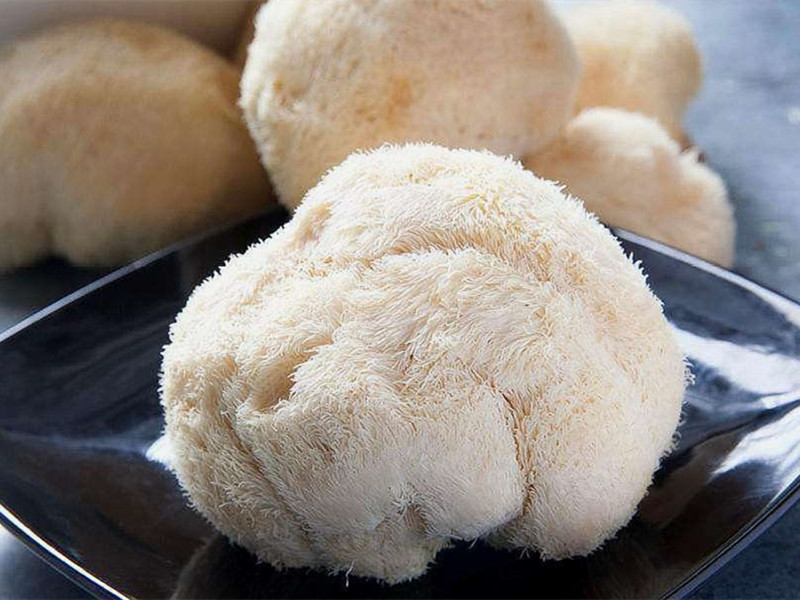
What Are Hericenones and Erinacines?
Hericenones and erinacines are natural, bioactive terpenoids found exclusively within the Lion’s Mane mushroom. Although they are often mentioned together to have the ability to stimulate the synthesis of Nerve Growth Factor (NGF), they differ significantly in chemical structure, source within the mushroom, and how they interact with the body.
Hericenones vs. Erinacines: Sourcing and Structural Differences
To select an effective Lion’s Mane supplement, it is crucial to recognize that the mushroom is divided into two distinct structural parts, each harboring a specific compound class. Understanding the difference between the fruiting body and mycelium is essential for interpreting supplement labels and research findings.
Hericenones are found predominantly in the fruiting body—the above-ground portion of the mushroom traditionally used in culinary dishes. While Erinacines are concentrated within the mycelium, the dense, root-like web that grows beneath the surface. Chemically, Hericenones are aromatic compounds that stimulate NGF synthesis primarily through pathways like the Protein Kinase A (PKA) and MEK/ERK pathways.

Erinacines (particularly Erinacine A) are small-molecule cyathin diterpenoids. Because of their molecular size, they are highly hydrophobic, allowing them to easily cross the blood-brain barrier to directly activate astroglial cells for robust NGF production.

| Feature | Hericenones | Erinacines |
| Primary Source | Fruiting Body (The visible, shaggy cap) | Mycelium (The underground, root-like network) |
| Chemical Structure | Phenol derivatives / Benzyl alcohol variants | Cyathin diterpenoids (e.g., Erinacine A–K, P–S) |
| Molecular weight | Moderate (less lipid-soluble) | Low (lipid-soluble) |
| Variants | 11 identified variants (Hericenones A–L), main players: Hericenone B, J | 20+ identified variants (Erinacines A–Z₂), main players: Erinacine A, C, S |
| Concentration | 20–500 µg/g dry weight | ~150 µg/g in mycelium; Erinacine A up to 19 mg/g in enriched extracts |
| Blood-brain barrier | Moderately suggested to cross | Highly bioavailable; verified to cross the BBB |
| Primary mechanism: | Stimulates NGF synthesis in vitro | Potent NGF induction + antioxidant/anti-inflammatory pathways |
| Extraction Medium | Typically ethanol or hot water | Specialized liquid or solid-state fermentation |
How They Support Cognitive Health and Neurogenesis?
1. Boosting Nerve Growth Factor (NGF)
NGF is a neurotrophin — a protein that supports the survival, development, and function of neurons, particularly cholinergic neurons in the brain’s basal forebrain, which are among the first to degenerate in Alzheimer’s disease. As the brain ages, NGF production naturally declines, which can contribute to diminished cognitive agility and neurodegenerative vulnerability. Because raw NGF cannot cross the blood-brain barrier due to its large molecular weight, the brain relies on small-molecule precursors to stimulate production from within. Research demonstrates that both hericenones and erinacines stimulate the synthesis of NGF, rather than merely protecting existing NGF from degradation.
2. Promoting Synaptic Plasticity and Memory
By increasing NGF levels, these compounds encourage neurite outgrowth—the branching of axons and dendrites from neurons. This process directly enhances synaptic plasticity, which is the brain’s ability to forge new neural pathways, adapt to new information, and consolidate short-term memories into long-term storage.
3. Reducing Neuroinflammation and Amyloid Plaques
The biological mechanisms of hericenones and erinacines extend far beyond general antioxidant protection. In vitro and animal models suggest that erinacines offer profound neuroprotective qualities. Studies indicate that Erinacine A-enriched formulas can help reduce the deposition of amyloid-beta plaques, a primary biological marker associated with Alzheimer’s disease. Furthermore, these compounds help mitigate microglial activation, reducing chronic neuroinflammation that can lead to brain fog and mental fatigue.
A landmark, double-blind, placebo-controlled study examined adults aged 50–80 who were diagnosed with mild cognitive impairment. Taking 3 grams of Lion’s Mane powder daily for 16 weeks resulted in significantly increased scores on cognitive function scales. Notably, these benefits decreased a few weeks after stopping supplementation, suggesting that consistent intake is required to maintain the neurological advantages.
4. Mood Support
Research also points toward an improvement in mood and sleep scores. A study involving overweight individuals showed that chronic supplementation increased circulating levels of pro-BDNF (Brain-Derived Neurotrophic Factor), correlating with lower self-reported scores for anxiety and depression.
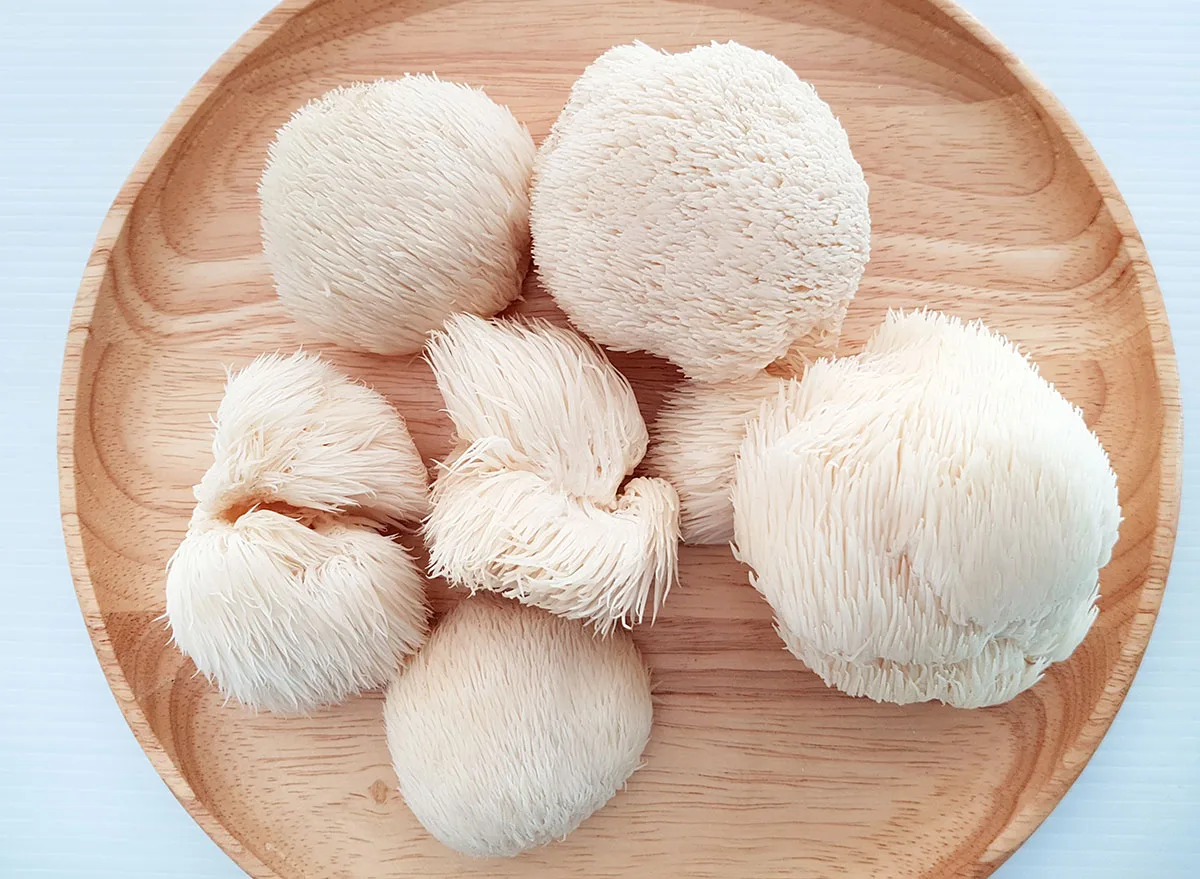
Why Erinacines Have an Advantage in NGF?
A critical question for any neuroactive compound is whether it can cross the blood-brain barrier. The blood-brain barrier (BBB) is a tightly sealed vascular interface that blocks most molecules from entering brain tissue. Erinacines are lipid-soluble cyathane diterpenoids. Lipid solubility allows passive diffusion across the BBB — a major advantage over water-soluble compounds like beta-glucans, which cannot cross into the central nervous system and instead act via immune modulation in the periphery1 [2].
Erinacine A has been detected in brain tissue after oral administration in animal models, confirming that it reaches its site of action. Erinacine S shows particular promise for the treatment of peripheral neuropathy. In a spinal nerve ligation model, erinacine S produced analgesic effects superior to erinacine A, suggesting potential for neuropathic pain management23. In MPTP-treated mice (a standard Parkinson’s model), erinacine A preserved dopaminergic neurons and improved motor coordination on rotarod tests. Hericenones are less lipid-soluble than erinacines and have more limited BBB penetration. However, hericenones may still exert neuroprotective effects through peripheral mechanisms that indirectly benefit the brain — for example, by reducing systemic inflammation, which is increasingly recognized as a driver of neurodegeneration.
How to Choose the Right Supplement?
When shopping for Lion’s Mane extract, understanding the distinction between hericenones and erinacines will help you avoid low-quality products. High-quality Lion’s mane extract manufacturers will state whether their extracts are standardized to guarantee a specific percentage of active beta-glucans, hericenones, or erinacines.
If you want a product rich in hericenones for general cognitive wellness and immune-boosting beta-glucans, select a 100% Fruiting Body extract. Look for the words: “fruiting body extract,” “whole mushroom,” or “100% fruiting body.” Hot-water or ethanol extraction from the mature mushroom cap captures hericenones.
If you are looking for potent, blood-brain barrier-permeating NGF stimulation via erinacines, select a product that utilizes pure mycelium biomass or a full-spectrum blend containing both parts. Look for: “mycelium extract,” “fermented mycelium,” “erinacine A-enriched,” or “full-spectrum mycelium.” Liquid fermentation-derived products are the primary source of erinacines.
If you are looking for: “full-spectrum Hericium erinaceus extract” that explicitly states it contains both mycelium and fruiting body, with labeled erinacine and hericenone content. Please note: Mycelium is often grown on a substrate, such as oats or rice. Ensure the brand utilizes advanced solid-state or liquid fermentation techniques to minimize residual grain starch, which can dilute the actual active erinacine content.
Safety & Dosage
Lion’s mane has a long history of culinary and medicinal use in China and Japan and is listed in the Chinese Pharmacopoeia. In preclinical studies, no organ toxicity or hematological abnormalities have been observed at tested doses. Reported adverse effects in human trials are mild and infrequent (occasional digestive discomfort). There is no universally established clinical dose for hericenones or erinacines. The available human trials have used different preparations and doses, making cross-study comparisons difficult. General observations from the literature include: The 16-week MCI trial used approximately 3 g/day of whole H. erinaceus fruiting body powder.
Erinacine A-enriched mycelium extracts in clinical trials used doses calibrated to erinacine A content rather than crude extract weight. Animal studies showing neuroprotection used erinacine A doses ranging from 1–20 mg/kg body weight, with an effective dose window (higher doses can reduce cell viability). Note that Lion’s Mane supplements are regulated as dietary supplements (not drugs) in the U.S. and many other jurisdictions. They are not approved by the FDA for the treatment of any disease. Always consult a healthcare provider before using Lion’s Mane for a medical condition or alongside medication.
Conclusion
Hericenones and erinacines are the two compound families that give Lion’s Mane mushroom its unique neuroscientific profile. Erinacines — particularly erinacine A and C — have the strongest preclinical evidence for NGF stimulation, antioxidant defense via Nrf2 activation, BDNF elevation, and neuroprotection in Alzheimer’s and Parkinson’s disease models. Hericenones complement these effects and remain an active area of research. By choosing a high-quality, transparently sourced supplement that targets these compounds, you can effectively support your focus, memory, and long-term neurological health.
References
- Chong et al. Lion’s Mane Mushroom (Hericium erinaceus): A Neuroprotective Fungus with Antioxidant, Anti-Inflammatory and Antimicrobial Potential — A Narrative Review. PMC12030463. 2025. pmc.ncbi.nlm.nih.gov
- Lee et al. Unveiling the role of erinacines in the neuroprotective effects of Hericium erinaceus: a systematic review in preclinical models. Front. Pharmacol. 2025. doi.org/10.3389/fphar.2025.1582081
- Effect of erinacine A-enriched Hericium erinaceus on cognitive function: a double-blind, placebo-controlled clinical trial. ScienceDirect. 2024.
- Zhang et al. Chemical Components and Neuroprotective Effect of Hericium erinaceus. Int. J. Mol. Sci. 2023; 24(21):15960. doi.org/10.3390/ijms242115960