
Lion’s Mane (Hericium erinaceus), as a traditional medicinal and edible mushroom, has become one of the world’s most popular mushrooms due to its potential to support cognitive function, nerve health, immune balance, and overall wellness. As consumer demand continues to rise, supplement manufacturers are looking for high-quality Lion’s Mane extracts that offer a full spectrum of bioactive compounds backed by scientific research. However, not all Lion’s Mane extracts are created equal. They are labeled with different extraction processes – water extract, alcohol extract, and dual extract – and many formulators and purchasers often encounter difficulties in making a choice. In this article, we’ll compare hot water extraction, alcohol extraction, and dual extraction, explain how each method works, and help you determine which produces the better Lion’s Mane extract.
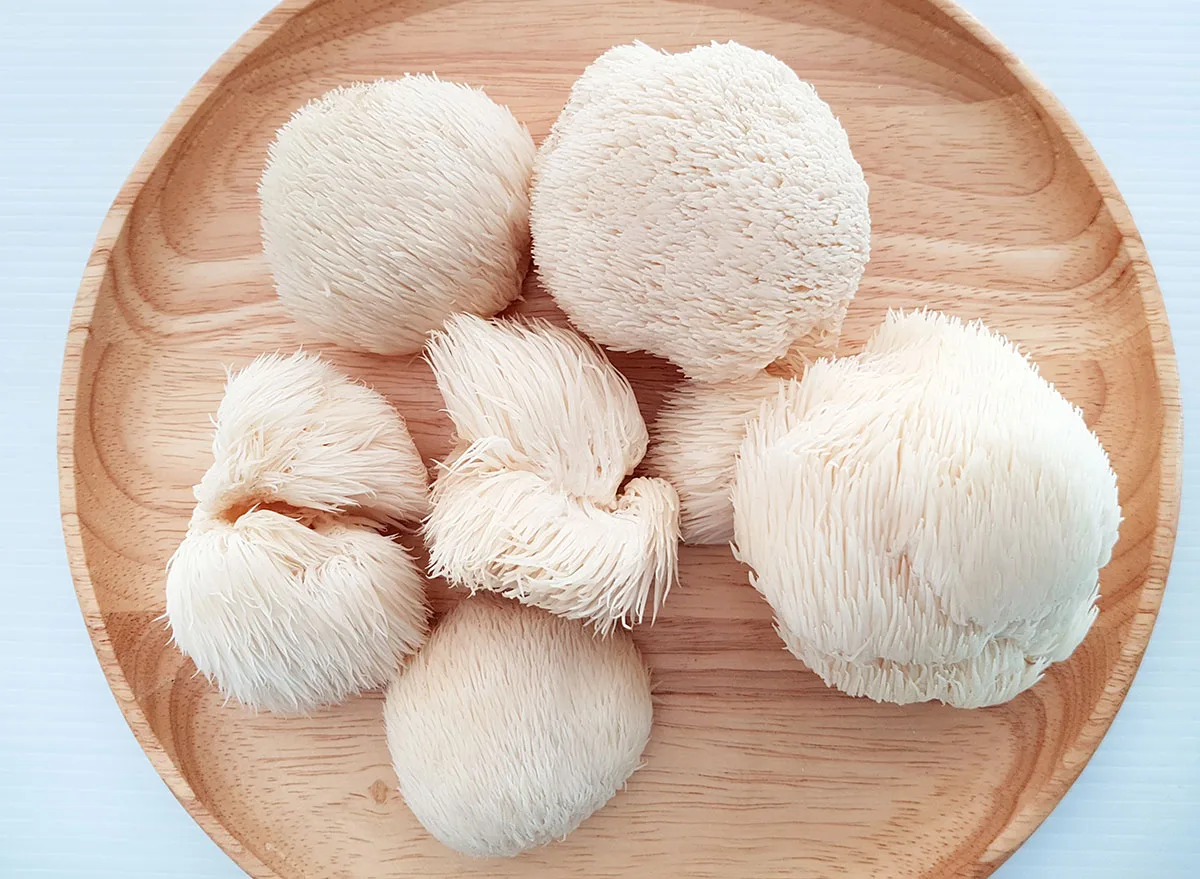
What Is Hot Water Extracted Lion’s Mane?
Water extraction is the most traditional and widely used method for medicinal mushrooms. It typically employs hot water extraction (at 60–100°C), fresh or dried Lion’s Mane fruiting bodies are simmered in purified water for several hours. Heat helps dissolve water-soluble compounds, which are then concentrated and spray-dried into powder. Sometimes it is supplemented with physical methods such as ultrasound or microwave to increase the extraction efficiency. This method primarily extracts:
- Polysaccharides
- Beta-glucans
- Alpha-glucans
- Dietary fibers
- Water-soluble protein
- Some minerals
Although the hot water extraction method has the advantages of low production cost, high β-glucan production, no solvent residue ect, however, hot water cannot efficiently extract alcohol-soluble compounds, including several of Lion’s Mane’s most valuable neuroactive molecules, such as: Hericenones, certain aromatic compounds and some phenolic constituents. As a result, hot water extracts may provide excellent immune support but may not fully represent the mushroom’s complete therapeutic potential.
What is Alcohol Extracted Lion’s Mane (Alcohol / Ethanol Extraction)?
Alcohol extraction typically uses ethanol as the solvent, with a concentration range of 30% – 95%. The extraction temperature is 50°C, the extraction time is 5 hours, and it is carried out twice. This method can effectively extract alcohol-soluble small molecule compounds such as Hericenones (monkey mushroom compounds), Hericenone J/Erinacines, etc. It also contains a high content of total phenols and total flavonoids. These components are mainly used in brain health and cognitive function products, neuroprotective dietary supplements, and cosmetic active ingredients.
What Is Dual Extracted Lion’s Mane?
Dual extraction combines hot water extraction with alcohol extraction to capture both water-soluble and alcohol-soluble compounds. It is currently the most comprehensive extraction process for obtaining an all-spectrum extract in industrial production. It typically follows the process route of “first water extraction, then alcohol extraction” or “simultaneous water-alcohol extraction,” followed by filtration, concentration, removal, and recovery of ethanol. Some advanced processes also combine technologies such as enzymatic hydrolysis and flash extraction.
This method produces a more comprehensive extract containing a wider spectrum of naturally occurring bioactive ingredients such as: Beta-glucans, Polysaccharides, soluble proteins, minerals, hericenones aromatic compounds, and additional antioxidant constituents. Because both groups of compounds remain intact, dual extracts more closely resemble the mushroom’s complete phytochemical profile.
Hot Water vs. Alcohol vs. Dual Extraction
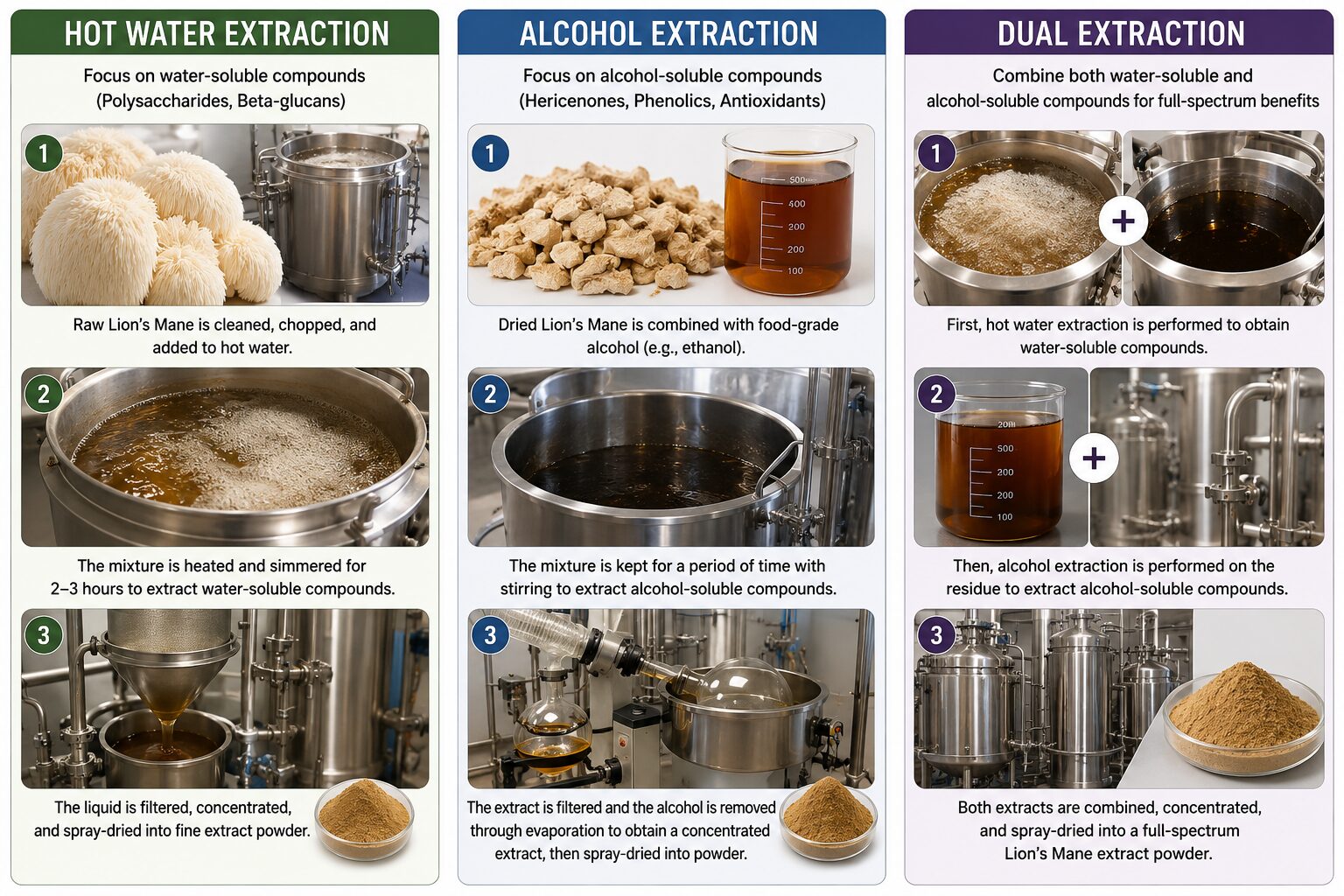
One of the biggest differences lies in the extraction process. While hot water extraction has long been the industry standard, alcohol extraction excels at isolating hericenones and phenolic compounds; dual extraction is increasingly recognized as the superior method for capturing a broader range of beneficial compounds.
| Feature | Hot Water | Alcohol | Dual |
| Active Ingredients | Polysaccharides, glycoproteins | Hericenones、Erinacines、Phenols | Polysaccharides + Hericenones + sterols + phenols (full spectrum) |
| Polysaccharides | ★★★★★ | ★ | ★★★★★ |
| Hericenones | ★ | ★★★★★ | ★★★★★ |
| Antioxidants | ★★★ | ★★★★ | ★★★★★ |
| Cognitive Support | ★★ | ★★★★★ | ★★★★★ |
| Immune Support | ★★★★★ | ★★ | ★★★★★ |
| Cost | Low | Medium | Higher |
| Product Type | Immune Formula | Brain Health Formula, NGF | Comprehensive or High-end Compound Formula |
| Process complexity | Simple | Medium | High |
Conclusion
The three extraction processes have important roles in producing high-quality Lion’s Mane extracts. Hot water extraction excels at concentrating beta-glucans and polysaccharides, making it an excellent choice for immune-focused formulations. Alcohol extraction excels at isolating hericenones, phenolic compounds, and other alcohol-soluble constituents that support cognitive and neurological health. Dual extraction, however, goes a step further by preserving both water-soluble and alcohol-soluble compounds, including hericenones that are closely associated with cognitive health. For supplement brands aiming to differentiate themselves with premium mushroom ingredients, Lion’s Mane dual extract represents a compelling solution. It offers the highest level of comprehensive active ingredient coverage and the greatest flexibility in formulation at a slightly higher cost.

- What Is AHCC and Is It Good for HPV? - August 14, 2026
- Duanwood vs. Bag vs. Liquid Fermentation: How Ganoderma lucidum Cultivation Methods Affect Its Active Compounds - July 27, 2026
- Lion’s Mane Extract 8:1: Why Does the Ratio Matter? - July 17, 2026


