Reishi mushroom, scientifically known as Ganoderma lucidum, has been used in traditional Asian wellness practices for centuries. Today, it is widely studied for its potential immune-supporting, adaptogenic, and antioxidant properties. Among the many bioactive compounds found in reishi, two groups receive the most attention: triterpenoids and polysaccharides.
Although both compounds contribute to the health benefits of reishi mushroom extract, they differ significantly in structure, function, extraction methods, and applications. Understanding the difference between reishi mushroom triterpenoids and polysaccharides can help consumers, supplement brands, and formulators choose the right extract for specific wellness goals.
What Are Ganoderma Polysaccharides?
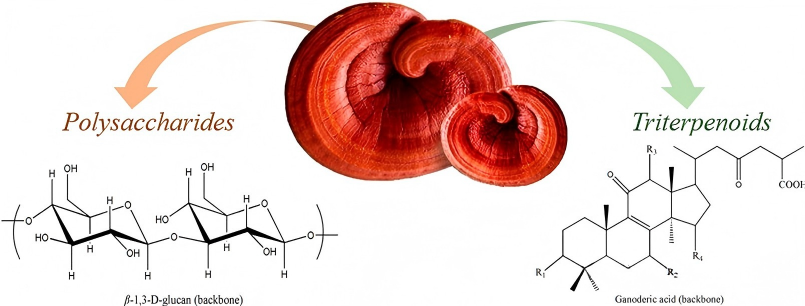
Ganoderma Polysaccharides are abundant in the fruiting body, mycelium, and spore powder of Ganoderma Lucidum, particularly in high concentrations in the cap region. Within the polysaccharide family, beta-glucans represent the most pharmacologically significant subgroup, recognized for their ability to modulate immune responses through specific receptor interactions. Their water-soluble nature makes them relatively straightforward to extract using conventional hot-water methods, which has contributed to their widespread availability in the supplement market.
What Are Ganoderma Triterpenoids?
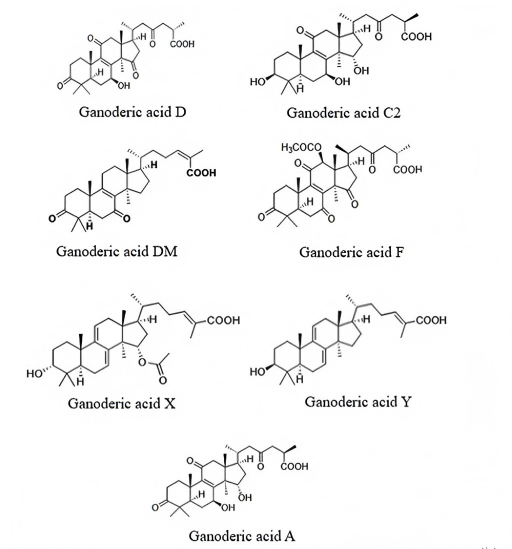
Ganoderma triterpenoids are naturally occurring compounds responsible for the mushroom’s characteristic bitter taste. Synthesis occurs predominantly during the later stages of fruiting body maturation; immature mycelial cultures contain negligible amounts of these compounds. These compounds are primarily ganoderic acids, a unique class of highly oxygenated triterpenes found in Ganoderma lucidum. To date, researchers have identified over 200 distinct triterpene compounds in Ganoderma species, reflecting an extraordinary structural diversity that continues to expand with ongoing research. Unlike polysaccharides, triterpenes are virtually insoluble in water and require organic solvents such as ethanol or methanol for effective extraction.
Difference Between Ganoderma Triterpenoids and Polysaccharides
While both compound classes contribute to Ganoderma lucidum’s reputation as a functional superfood, their structural, extraction methods, mechanisms of action, potency profiles, and clinical applications diverge significantly. Understanding the distinction between these two compound groups is essential when evaluating reishi mushroom supplements or raw materials
Structural Divergence
Polysaccharides are long-chain carbohydrate molecules naturally abundant in medicinal mushrooms. It’s composed of repeating sugar units such as glucose, mannose, xylose, and arabinose, linked together by glycosidic bonds. These water-soluble compounds typically exhibit molecular weights ranging from 10,000 to over 1,000,000 Daltons, making them among the largest bioactive molecules found in nature. Triterpenes are lipid-soluble secondary metabolites built from 30 carbon atoms arranged in six isoprene units, forming either tetracyclic or pentacyclic ring structures. With a relative molecular weight ranging from 400 to 600, they are highly oxidized small-molecule terpenoid compounds.
Mechanisms of Action
The structure of these two compound classes translates into fundamentally different pharmacological profiles. Immunomodulation represents the primary domain of polysaccharides, particularly beta-glucans. Immunomodulation represents the primary domain of polysaccharides, particularly beta-glucans. The immunomodulatory effects are characterized as “indirect” — polysaccharides do not directly attack pathogens or tumor cells, but rather strengthen the body’s surveillance and response systems. This makes polysaccharide-rich extracts particularly valuable for general immune support, post-surgical recovery, and populations with compromised immune function.
Triterpenes, conversely, operate as direct bioactive agents, exerting targeted effects on cellular processes including inflammation, angiogenesis, and viral replication. Ganoderic acid C1, for instance, has demonstrated the ability to reduce TNF-alpha production in both laboratory cell lines and peripheral blood mononuclear cells from asthma patients. This direct mechanistic action positions triterpene-standardized extracts as superior candidates for formulations targeting chronic inflammatory conditions such as arthritis, inflammatory bowel disease, and metabolic syndrome.
Extraction Methods
The divergence in chemical properties between triterpenes and polysaccharides necessitates fundamentally different extraction approaches, with profound implications for product quality, cost structure, and regulatory compliance. Polysaccharide extraction relies primarily on hot-water extraction, a relatively straightforward process where dried Ganoderma material is subjected to elevated temperatures (typically 80–100°C) to solubilize the carbohydrate fraction. This method is cost-effective, scalable, and well-established across the industry. However, extraction efficiency depends critically on raw material particle size, water-to-material ratio, extraction time, and temperature control — parameters that vary significantly between manufacturers. Enzyme-assisted extraction and ultrasound-assisted methods represent emerging technologies that can improve yield and reduce processing time, though they add complexity and cost.
Triterpene extraction presents substantially greater technical challenges due to the lipid-soluble, heat-sensitive nature of these compounds. Organic solvent extraction using methanol, ethanol, or chloroform is required to liberate triterpenes from the fungal matrix. Supercritical CO₂ extraction represents the gold standard for high-end applications, offering superior selectivity, absence of solvent residues, and preservation of thermolabile compounds — but at significantly higher operating costs.
Primary Applications
Polysaccharide extracts are optimally positioned for broad-market immune support products. From a formulation perspective, polysaccharide extracts offer excellent versatility — they dissolve readily in aqueous systems, making them ideal for functional beverages, gummies, powders, and capsules. Their heat stability (relative to triterpenes) simplifies manufacturing processes and extends shelf life. Triterpene-standardized extracts command premium positioning for targeted therapeutic applications.
The direct pharmacological actions of triterpenes — anti-inflammatory, hepatoprotective, antihypertensive, and antiviral — support more specific health claims (within regulatory boundaries) and justify higher price points. Ideal target demographics include: consumers with chronic inflammatory conditions seeking natural adjunct therapies; individuals with metabolic syndrome or cardiovascular risk factors; patients in oncology support protocols; and biohackers and longevity enthusiasts attracted to mechanistically sophisticated ingredients.
Price
Entry-level polysaccharide powders (standardized to 10–20% polysaccharides) wholesale at $15–30 per kilogram. Premium beta-glucan concentrates (≥30%) command $50–100/kg. Triterpene-rich extracts (≥4% ganoderic acids) range from $80–200/kg, while full-spectrum dual extracts with verified bioactive profiles can exceed $300/kg.
Difference Comparison Table
| Feature | Ganoderma Triterpenoids | Ganoderma Polysaccharides |
| Chemical Category | Secondary Metabolites | High Molecular Weight Carbohydrates |
| Solubility | Fat-soluble | Water-soluble |
| Taste | Bitter | Mild |
| Extraction Method | Alcohol extraction | Hot water extraction |
| Main Compounds | Ganoderic acids | Beta-glucans |
| Primary Function | Stress, liver, antioxidant support | Immune modulation and wellness |
| Source | Mainly fruiting body | Fruiting body, mycelium and spore powder |
| Formulation | Soft capsules (spore oil), extract capsules | Oral liquid, powder, capsules |
| Storage conditions | Low temperature and avoid exposure to light | Protect from moisture and light |
| Price | $80–200/kg | $15–100/kg |
Conclusion
The difference between reishi mushroom triterpenoids and polysaccharides comes down to their chemical structure, extraction method, and biological function. Understanding these differences can help ensure better product selection, formulation accuracy, and targeted health benefits. Polysaccharides, led by beta-glucans, deliver broad-spectrum immune modulation through indirect mechanisms. Triterpenes, with their direct pharmacological actions across inflammation, oncology, cardiovascular, and hepatic domains, command premium positioning and justify higher investment in extraction technology and quality control. For consumers and supplement brands alike, the best reishi mushroom extract often contains a balanced combination of both compounds.
References
- National Center for Biotechnology Information (NCBI) – Ganoderma lucidum bioactive compounds and pharmacological functions.
- Memorial Sloan Kettering Cancer Center – Reishi Mushroom overview and active constituents.
- Journal of Ethnopharmacology – Research on reishi polysaccharides and immune activity.
- Frontiers in Pharmacology – Studies on ganoderic acids and triterpenoid bioactivity.
Are you developing a Reishi mushroom extract-based product line? Share your sourcing challenges and formulation goals via [email protected] — our team of industry experts is here to help you navigate this complex but rewarding ingredient category.