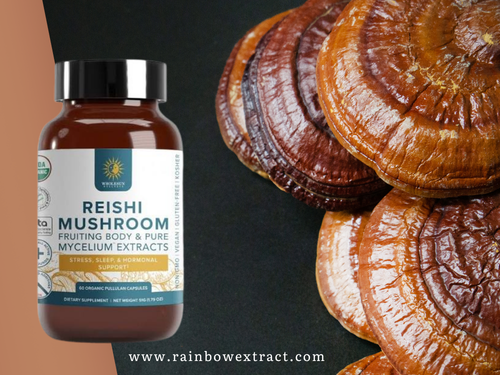
If you’ve ever shopped for reishi mushroom(Ganoderma lucidum) supplements, you’ve probably seen the term reishi double extraction on a few higher-end labels. Plenty of brands throw the phrase around. Far fewer actually explain what it means, why the process exists, and whether you can tell a true double-extracted product from a label that just borrows the buzzword.
This guide breaks down both. You’ll learn what double extraction actually does at the chemistry level, which compounds it captures that single-solvent methods miss, the benefits backed by research, and the four-line label check that separates genuinely double-extracted reishi from the rest.
What Is Reishi Double Extraction?

Reishi double extraction is a two-step manufacturing process that pulls compounds from the mushroom using both water and alcohol in sequence. Each solvent is chosen for what it dissolves best.
Reishi contains two very different families of beneficial compounds:
- Beta-glucans and other polysaccharides — large sugar molecules that dissolve easily in hot water
Triterpenes, including ganoderic acids — fat-soluble molecules that only dissolve meaningfully in alcohol
A single solvent — water OR alcohol — can pull one family but leaves the other behind. Double extraction uses both, in sequence, so the final extract contains the full spectrum of compounds the mushroom actually produces.
This is not a marketing gimmick. It’s the same logic used in traditional Chinese medicine, where reishi (lingzhi) has been simmered in water and steeped in alcohol for over 2,000 years. Modern manufacturers just scaled the same idea into a regulated, repeatable industrial process.
How Do the Two Steps Work?
Hot water extraction — Ground reishi fruiting body is simmered at controlled temperatures for several hours. Water pulls out the beta-glucans and other water-soluble polysaccharides.
Alcohol extraction — The same mushroom material (now dried) is steeped in food-grade ethanol. Ethanol pulls out the triterpenes and ganoderic acids that water couldn’t dissolve.
Combination — The two extracts are blended, concentrated, and spray-dried into the final powder.
Some manufacturers run the steps in the opposite order (alcohol first, then water). Both orders work, as long as both solvents are used. The end result is what matters.
Why One Solvent Isn’t Enough?
The supplement industry has historically used single-solvent extraction because it’s cheaper and faster. The trade-off is real, and it’s measurable.
Water-only extracts deliver impressive beta-glucan percentages — often 25% to 40% on the Certificate of Analysis — but their triterpene content is negligible. If you’re buying reishi for immune support and don’t care much about triterpenes, this can be a cost-effective option. But you’re getting roughly half the mushroom.
Alcohol-only extracts are the opposite. They capture triterpenes (typically 4% to 20% total triterpenes, depending on purification) but miss most of the beta-glucans. These tend to be marketed for liver health, calm, and cardiovascular support.
A genuinely double-extracted reishi product delivers both. Independent lab assays of reputable dual-extract powders typically show beta-glucans above 15% and total triterpenes above 4%, sometimes much higher. You can see the difference in the cost — and in the bitterness on the tongue.
What Compounds Double Extraction Captures
The value of double extraction lies in the compound profile of the final powder. Here’s what you’re getting when both solvents have been used correctly:
| Compound Family | Solvent Used | Why It Matters |
|---|---|---|
| Beta-glucans (β-1,3/1,6) | Water | Immune modulation, gut health, blood sugar balance |
| Heteropolysaccharides | Water | Complement system support, broader immune response |
| Ganoderic acids A, B, C, D | Alcohol | Liver protection, anti-inflammatory, calm and sleep |
| Lucidenic acids | Alcohol | Neuroprotective effects studied in animal models |
| Sterols and ergosterol | Alcohol | Cell membrane health, vitamin D precursor activity |
Traditional Chinese herbalism has long claimed that the whole mushroom works better than isolated compounds — what pharmacologists today call the “entourage effect.” Double extraction is the practical industrial version of that principle.
Benefits of Double-Extracted Reishi
Because the product contains the full compound spectrum, the range of benefits is genuinely broader than single-extract alternatives. Research is ongoing, but the strongest evidence clusters in three areas.
Immune System Support
The beta-glucan fraction in double-extracted reishi activates macrophages, natural killer cells, and dendritic cells — the front-line defenders of innate immunity. Multiple human studies have shown increased immune activity in subjects taking standardized reishi extract over 8 to 12 weeks. This is also the area where reishi has the longest history of traditional use.
Liver Health and Detox Support
The triterpene fraction, especially ganoderic acid A, has been studied for hepatoprotective effects — protecting liver cells from toxin damage and supporting normal liver enzyme levels. In East Asia, reishi is a standard complementary therapy for people with elevated liver enzymes, often paired with prescribed medication under medical supervision.
Calm, Sleep, and Stress Resilience
Reishi is sometimes called the “mushroom of immortality” in classical Chinese texts, but in modern wellness circles it’s known just as often as a calming adaptogen. The triterpene and sterol fractions appear to support healthy cortisol rhythms and improve subjective sleep quality. Most users notice the calming effect within two to three weeks of consistent use.
A note on side effects: reishi is generally well tolerated. A small percentage of users experience mild digestive upset during the first week. Anyone on blood-thinning medication, immunosuppressants, or chemotherapy should speak with a doctor before starting — the immune-stimulating effects can interact with these drugs.

Conclusion
The phrase reishi double extraction is one of the more meaningful distinctions on a reishi supplement label — provided the manufacturer has actually done both steps and can prove it with independent lab assays. Water-only extracts will give you strong beta-glucans at a lower price. Alcohol-only extracts will give you triterpenes but miss the polysaccharides. Only double extraction delivers the full compound spectrum that 2,000 years of traditional use and a growing body of modern research point toward.
When you’re shopping, skip the marketing language and check the Certificate of Analysis. Beta-glucans and total triterpenes should both be listed, both in clinically meaningful ranges, and both from a fruiting body — not mycelium grown on grain. Anything less, and you’re paying for a half-extracted product.
Looking for a fruiting body reishi extract with verified beta-glucan content and full COA documentation? Rainbow Biotech supplies Organic-certified Ganoderma lucidum extract to supplement brands worldwide — get a quote or request samples.

- What Is Reishi Double Extraction? - September 8, 2026
- Reishi Mushroom Fruiting Body Extract vs Mycelium: Which is better? - September 1, 2026
- What Is AHCC and Is It Good for HPV? - August 14, 2026