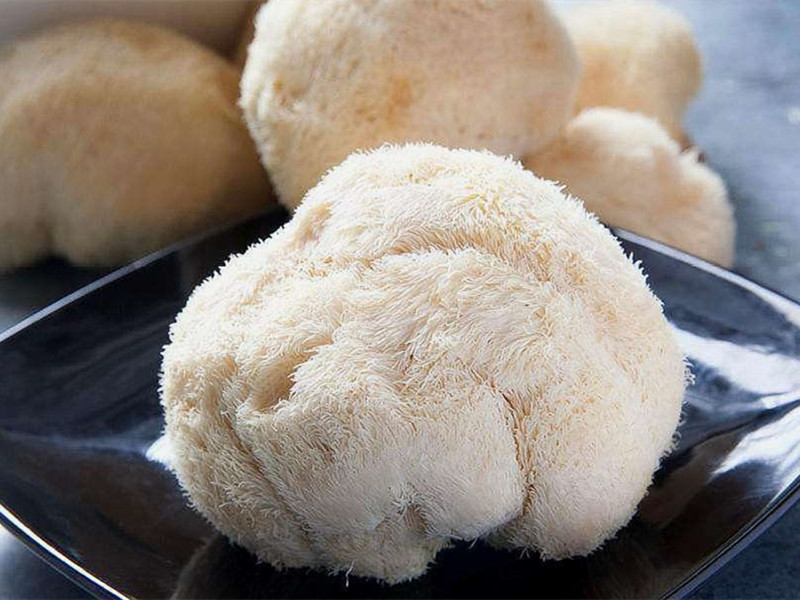
In the world of functional mushrooms, lion’s mane (Hericium erinaceus) has attracted increasing attention due to its potential brain-boosting properties. Research has found that in addition to functional macromolecules such as polysaccharides and proteins, Hericium erinaceus also contains small-molecule active components such as terpenoids, cerebrosides, phenols and sterols. In particular, hericenones and erinacines, are the main driving forces behind the cognitive and neurological health benefits of mushrooms. Unlike the common antioxidants or polysaccharides found in many medicinal mushrooms, are unique for their ability to stimulate nerve growth factor (NGF), making them valuable for memory, focus, and long-term brain health. This article systematically reviews the sources, chemical structures and biological activities of the reported components in Hericium erinaceus. If you are interested, keep reading.
Polysaccharide
Polysaccharides are the most studied bioactive components of Hericium erinaceus. Different culture conditions and growth stages usually significantly affect the content, composition and structure of polysaccharides in Hericium erinaceus. Polysaccharides from fruiting bodies, mycelium or fermentation broth usually have different structures. Most of the polysaccharides in the fruiting body are heteropolysaccharides composed of two or more monosaccharides, and there are also glucans composed only of glucose and a few glycoproteins. However, in the mycelium, there are usually only heteropolysaccharides and glycoproteins. Although the monosaccharide composition of polysaccharides from these two sources is mainly galactose, glucose and mannose, they have different composition ratios. The polysaccharides in the fruiting body have many different types of glycosylated bonds, more than those in the mycelium and fermentation broth. These differences may affect the biological activity of polysaccharides to a certain extent. Table 1 lists the molecular weight, monosaccharide composition, structural characteristics and biological activities of some representative polysaccharides extracted from the fruiting bodies, mycelium and cultures of Hericium erinaceus.

Hericenone
Hericenones are found primarily in the fruiting body of Lion’s Mane known to stimulate NGF synthesis in brain cells. Researchers have extracted and purified at least eight benzyl alcohol derivatives from the fruiting bodies of Hericium erinaceus and named these substances Hericenone A, B, C, D, E, F, G and H. Subsequently, Hericenone I, J, 3-hydroxy h, Hericenone F, Hericenone El and K were isolated. At present, the total synthesis of Hericium erinacetin A to I has been achieved. Table 2 lists the extraction methods, structures and biological activities of the isolated and identified monkey head ketone. Hericenone is not a strict chemical classification. Among them, Hericenone C, D, E and I are phenols, Hericenone A, I, J, H, G and F are ketones, while Hericenone B belongs to alkaloids. They are similar in molecular structure: most of them have methoxyphenol as the parent nucleus, and in a few compounds (such as HericenoneF, G and I), the phenolic hydroxyl groups react with alkene bonds to form pyran structures. Studies have shown that Hericenone C, D, E, H and 3-hydroxyhericenone F have neuroprotective activity, while Hericenone F, G, I (1), J and K have been proven not to have it. In addition, Hericenone A, B, I (2), and L exhibit cytotoxicity against cancer cells.

Erinacines
Erinacines are found in the mycelium of Lion’s Mane, mostly in the form of xylosides, and some of them can be mutually transformed. For instance, through biotransformation, hericitin P can be converted into Erinacines A and B, and Erinacines Q can be transformed into Erinacines C. They possess neurotrophic inducible activity similar to that of hericitin, among which hericitin A has also been found to have excellent antioxidant activity. Subsequently, the research team and other researchers successively identified a series of hericitin, totaling over 19 types. It’s considered more potent than hericenones for promoting nerve regeneration. Their molecular structures and biological activities are shown in Table 3.

Phenols
Hericenes A-D is A type of phenolic compound with a long fatty acid chain isolated from the mycelium of Hericium erinaceus, and its structure is similar to that of Hericenes. They all have inhibitory activity against nuclear factor κB (NF-κB) and hypoglycemic activity. The main difference between hericenes and hericenones lies in the oxidation level of the geranium alkyl side chains.
Ketones
Erinacerins A-N is A group of isoindolinone compounds. Among them, Erinacerins A, B, M and N are derived from the fruiting bodies of Hericium erinaceus, while Erinacerins C-L is derived from the solid culture of Hericium erinaceus and has α -glucosidase inhibitory activity. Four new isoindolinone compounds with neurotrophic activity, hericerin, isohericerinol A, N-de-phenylethyl isohericerin and corallocin A, were isolated from the fruiting bodies of Hericium erinaceus. Erinapyrones A, B and C are three γ -pyranones isolated from mycelium, among which the first two are cytotoxic to HeLa cells.
Sterol
Hericium erinaceus also contains sterols structurally similar to plant sterols, such as ergosterol, which has antibacterial, anti-inflammatory and gastric mucosal protective activities. Erinarol A-G is A group of sterol fatty acid esters isolated from the methanol extract of the fruiting body of Monkey head mushroom.
Proteins and peptides
Mushrooms are gradually being recognized as a promising source of new proteins and peptides. A single-band protein (HEP3) was isolated from Hericium erinaceus through chemical separation and pharmacodynamic evaluation. This protein exhibited immunomodulatory activity in both macrophages and mice.
The coexistence of these powerful compounds endows Hericium erinaceus with multiple biological activities, such as antioxidant, anti-cancer, digestive tract protection, immune regulation, antibacterial, neuroprotective, hypoglycemic and anti-fatigue activities. In addition to Hericium erinaceus polysaccharides, other small molecule active components of Hericium erinaceus, such as hericenones and erinacines, are more than just mushroom buzzwords — they represent a breakthrough in natural brain health support. With their ability to stimulate nerve growth factor and protect against age-related decline, they are among the most promising bioactive compounds in the field of functional nutrition and nootropics.

- What Is AHCC and Is It Good for HPV? - August 14, 2026
- Duanwood vs. Bag vs. Liquid Fermentation: How Ganoderma lucidum Cultivation Methods Affect Its Active Compounds - July 27, 2026
- Lion’s Mane Extract 8:1: Why Does the Ratio Matter? - July 17, 2026


